
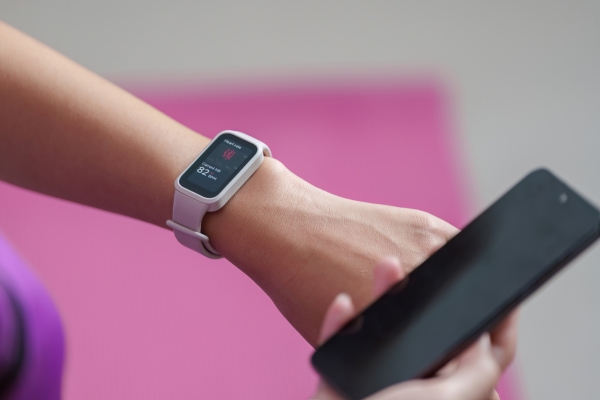
I’ve always been someone who finds wearables incredibly motivating, especially when I have a clear target and data to work with. Honestly, that’s probably why I fell in love with OrangeTheory back in the day. Seeing the numbers during the workout made everything feel more intentional and oddly empowering.
Now, I know for a lot of people, data can feel overwhelming. And I get that. But when you use wearables as a tool, not an end-all, be-all metric, I actually find them really valuable and motivating. I want to know that the workouts I’m putting time and energy into are actually doing something. Call me curious, call me type A, but I like receipts.
So recently, I invested in a Polar heart rate chest strap. Pro tip: you don’t have to go all-in right away. You can often find them on Facebook Marketplace for a great price, try it out, and see if you even like using one before buying brand new from Amazon.
Of course, the timing wasn’t perfect, I’m currently 22 weeks pregnant, which means traditional heart rate zones kind of go out the window. Pregnancy changes your physiology in a big way, so the numbers don’t always mean what they used to. That said, I’m still finding it valuable, and I’m really looking forward to using the data more traditionally postpartum and long-term.
What I love most about the Polar chest strap is how seamlessly it integrates with my Peloton. You can connect it directly, use the Polar app, and even set it so your device announces what heart rate zone you’re in during your workout. I love that instant feedback. It helps me know when I might need to push a little more (like if I’m hanging out in Zone 1 longer than intended) or when it’s time to back off.
Yes, you should always listen to how your body feels, but if I’m being honest, I tend to under-push when left entirely to my own perception. Having that real-time data keeps me accountable and honest with my effort.
Another way I’ve been using it? Rest periods. Instead of resting for an arbitrary amount of time, I’ll wait until my heart rate drops back into a specific zone based on my goal for that workout. It’s such a simple tweak, but it makes rest more intentional and workouts feel more structured without being rigid.
Bottom line: wearables aren’t for everyone—and that’s okay. But if you’re someone who likes feedback, targets, and a little extra motivation, they can be an incredibly helpful addition when used wisely. Data doesn’t have to control you. Sometimes, it just helps you show up a little more intentionally.
If Your Goal Is Strength / Hypertrophy
No, you do NOT need to wait until Zone 1-2.
What to do instead:
- Start your next set when:
- Breathing feels controlled again
- You feel neurologically ready (strength + focus are back)
- This usually happens in high Zone 2 → Zone 3, not full recovery
Typical rest:
- Big compound lifts: 90–180 seconds
- Accessories: 60–90 seconds
👉 Waiting for Zone 1 will often reduce load, reps, and muscle stimulus.
If Your Goal Is Muscular Endurance / Metabolic Work
Sometimes—yes, but not always all the way to Zone 1.
Best practice:
- Let HR drop to Zone 2 before starting again
- This allows partial recovery while keeping intensity high
- Keeps the workout challenging without redlining too early
This is perfect for:
- Circuits
- Supersets
- Conditioning days
- ELF finishers 😉
If Your Goal Is Cardio / Zone Training
Yes, this is where HR zones matter most.
- Zone 2 work: wait until you’re fully back in Zone 2 before pushing again
- Intervals: recover to low Zone 2 before the next hard effort
This improves:
- Mitochondrial efficiency
- Aerobic base
- Recovery between hard efforts
Quick Cheat Sheet 🧠
| Training Goal | When to Start Next Set |
|---|---|
| Strength / Hypertrophy | When breathing + strength return (Zone 2–3) |
| Muscular Endurance | Drop to Zone 2 |
| Conditioning / Circuits | Zone 2 (don’t wait for Zone 1) |
| Cardio / Intervals | Zone 2 (or low Zone 2) |
💡 Trainer Tip:
- Heart rate lags during lifting — don’t let HR dictate strength rest too strictly.
- Watch breathing first — nose breathing = ready to go.
- Use HR as a guide, not a rule — performance always wins.
Hope this helps!